Future-Proofing Mid-Scale PV Lines with Yoha Solar's Adaptable Technology
The photovoltaic industry's rapid evolution presents unique challenges for 5-100MW semi-automatic lines. Unlike gigawatt-scale facilities committed to single technologies for years, mid-sized manufacturers must remain agile, adapting quickly as the industry shifts from PERC to TOPCon, from full cells to half-cut designs. This adaptability requirement shapes every equipment decision in the modern semi-automatic factory.
Cell sorting represents the first adaptability checkpoint. Modern lines must handle multiple cell types—PERC, TOPCon, HJT—within the same week, each requiring different handling characteristics. Advanced sorters with class A+ solar simulation (1000W/m² intensity) must accommodate varying cell thicknesses down to 130μm while maintaining measurement accuracy. Equipment with quick-change tooling and software-defined parameters enables manufacturers to respond to market demand shifts within hours rather than days. #Solar Tech Adaptability #Cell Sorting
Laser processing faces even greater adaptability demands. Half-cell and shingled designs require different cutting patterns and precision levels. Modern laser scribing systems must handle cell sizes from 156mm to 230mm while maintaining kerf widths below 40μm and positioning accuracy within ±0.1mm. The ability to switch between 1/2, 1/3, or 1/4 cutting configurations through software determines whether a line can economically produce specialty modules. Yoha Solar's laser platforms exemplify this software-defined adaptability, allowing instant reconfiguration as order requirements change. #Laser Scribing #Cell Cutting
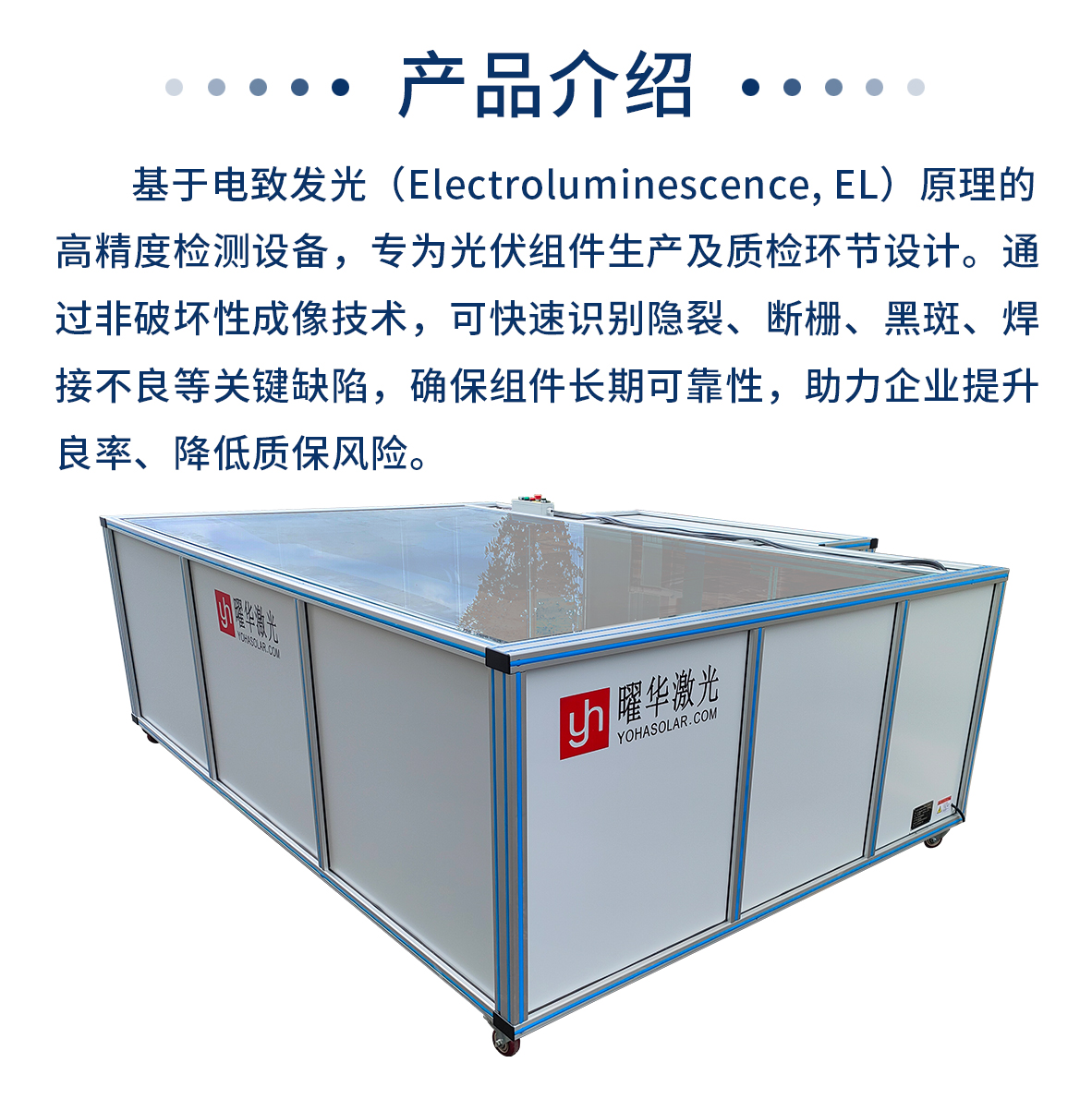
Inspection infrastructure must evolve alongside process technologies. Electroluminescence testing requires defect detection algorithms trained on multiple cell architectures—what appears normal in PERC might indicate critical defects in TOPCon. Advanced EL systems with AI-driven recognition detect micro-cracks below 0.03mm while automatically adapting inspection criteria based on cell type. This intelligence prevents false rejects while ensuring technology-specific defects never reach finished modules. #EL Testing #Defect Detection
Data integration binds these adaptable components into coherent systems. When sorting, cutting, and inspection equipment share a common platform, manufacturers gain visibility into how each cell technology performs across process steps. This enables predictive adjustments—if TOPCon cells show higher breakage at certain speeds, the system compensates before yield suffers. Yoha Solar's equipment ecosystem supports this data continuity, with each device designed for seamless communication. #Solar Manufacturing
Final electrical characterization must validate performance across evolving technologies. Class A+ solar simulators with spectral match and light stability within A+ grade ensure accurate IV measurement regardless of cell architecture. For manufacturers serving multiple segments—utility bifacial, residential shingled, commercial half-cut—this certainty ensures accurate power ratings for every module. #IV Testing #Solar Certification
For 5-100MW producers, equipment adaptability transforms technological disruption into opportunity. When lines pivot quickly to emerging cell architectures, manufacturers capture premium margins available to early adopters. This agility enables mid-sized factories to compete effectively against the scale advantages of gigawatt facilities.
#Solar Testing# #IV Tester# #PV Manufacturing# #Solar Quality Control# #IV Testing# #Photovoltaic Manufacturing# #Solar Automation# #Renewable Tech# #Solar Panel Testing# #Clean Energy# #PV Innovation# #Solar Quality# #Renewable Tech# #PV Testing# #Solar Simulator# #Solar Cell Efficiency# #Photovoltaics# #Solar Module Testing# #Photovoltaic Quality# #Solar Panel Testing# #IV Curve Analysis# #Clean Energy Tech# #IV Tester# #Perovskite Tester# #IV Curve# #PV Efficiency# #Perovskite PV# #Solar Testing# #Solar Cell Inspection# #Auto Sorting Upgrade# #Sorting Tech Core# #PV Sorting Equipment# #Solar Cell Quality##Solar Cell QC##Cell Sorting Gear# #PV Inspection Tech# #Solar Cell Scribing Machine# #Solar Cell Scribing# #Solar Cell Tech# #Laser Scribing#
Cell sorting represents the first adaptability checkpoint. Modern lines must handle multiple cell types—PERC, TOPCon, HJT—within the same week, each requiring different handling characteristics. Advanced sorters with class A+ solar simulation (1000W/m² intensity) must accommodate varying cell thicknesses down to 130μm while maintaining measurement accuracy. Equipment with quick-change tooling and software-defined parameters enables manufacturers to respond to market demand shifts within hours rather than days. #Solar Tech Adaptability #Cell Sorting
Laser processing faces even greater adaptability demands. Half-cell and shingled designs require different cutting patterns and precision levels. Modern laser scribing systems must handle cell sizes from 156mm to 230mm while maintaining kerf widths below 40μm and positioning accuracy within ±0.1mm. The ability to switch between 1/2, 1/3, or 1/4 cutting configurations through software determines whether a line can economically produce specialty modules. Yoha Solar's laser platforms exemplify this software-defined adaptability, allowing instant reconfiguration as order requirements change. #Laser Scribing #Cell Cutting
Inspection infrastructure must evolve alongside process technologies. Electroluminescence testing requires defect detection algorithms trained on multiple cell architectures—what appears normal in PERC might indicate critical defects in TOPCon. Advanced EL systems with AI-driven recognition detect micro-cracks below 0.03mm while automatically adapting inspection criteria based on cell type. This intelligence prevents false rejects while ensuring technology-specific defects never reach finished modules. #EL Testing #Defect Detection
Data integration binds these adaptable components into coherent systems. When sorting, cutting, and inspection equipment share a common platform, manufacturers gain visibility into how each cell technology performs across process steps. This enables predictive adjustments—if TOPCon cells show higher breakage at certain speeds, the system compensates before yield suffers. Yoha Solar's equipment ecosystem supports this data continuity, with each device designed for seamless communication. #Solar Manufacturing
Final electrical characterization must validate performance across evolving technologies. Class A+ solar simulators with spectral match and light stability within A+ grade ensure accurate IV measurement regardless of cell architecture. For manufacturers serving multiple segments—utility bifacial, residential shingled, commercial half-cut—this certainty ensures accurate power ratings for every module. #IV Testing #Solar Certification
For 5-100MW producers, equipment adaptability transforms technological disruption into opportunity. When lines pivot quickly to emerging cell architectures, manufacturers capture premium margins available to early adopters. This agility enables mid-sized factories to compete effectively against the scale advantages of gigawatt facilities.
#Solar Testing# #IV Tester# #PV Manufacturing# #Solar Quality Control# #IV Testing# #Photovoltaic Manufacturing# #Solar Automation# #Renewable Tech# #Solar Panel Testing# #Clean Energy# #PV Innovation# #Solar Quality# #Renewable Tech# #PV Testing# #Solar Simulator# #Solar Cell Efficiency# #Photovoltaics# #Solar Module Testing# #Photovoltaic Quality# #Solar Panel Testing# #IV Curve Analysis# #Clean Energy Tech# #IV Tester# #Perovskite Tester# #IV Curve# #PV Efficiency# #Perovskite PV# #Solar Testing# #Solar Cell Inspection# #Auto Sorting Upgrade# #Sorting Tech Core# #PV Sorting Equipment# #Solar Cell Quality##Solar Cell QC##Cell Sorting Gear# #PV Inspection Tech# #Solar Cell Scribing Machine# #Solar Cell Scribing# #Solar Cell Tech# #Laser Scribing#
文章关键词: