
How to do I-V curve testing?
I-V curve testing is a method to evaluate the electrical performance of electronic devices by measuring their current response under varying voltages and plotting the current-voltage (I-V) relationship. Below are the general testing steps applicable to photovoltaic modules and semiconductor devices:
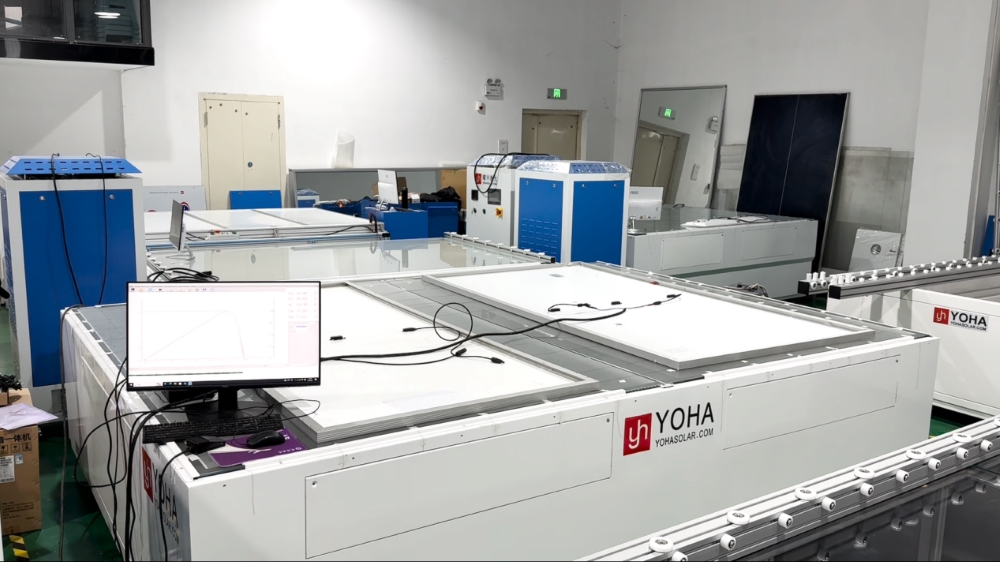
1. Test Preparation
- Equipment Selection: Use a dedicated IV tester (e.g.,Yoha Solar's Panel IV Tester ,Fluke I-V Analyzer) or a solar array analyzer (e.g., Fluke PVA-1500).
- Environmental Requirements:
- For photovoltaic testing, ensure stable illumination (typically using a solar simulator or clear outdoor conditions).
- For semiconductor testing, maintain a constant temperature and interference-free laboratory environment.
- Circuit Connection:
- Correctly connect the device under test (e.g., solar panel, MOSFET) to the testing system.
- Ensure proper polarity to avoid short circuits.
2. Test Procedure
- Parameter Setup:
- Set the voltage sweep range (from 0V to slightly above the open-circuit voltage, Voc).
- Define the voltage step size and sampling frequency to ensure data accuracy.
- Sweep Execution:
- The tester automatically applies incremental voltage and records the corresponding current.
- For three-terminal devices like MOSFETs, fix the gate voltage (VG), sweep the drain voltage (VD), and measure the drain current (ID).
- Data Acquisition and Plotting:
- The system automatically generates the I-V curve.
- Extract key parameters: Voc (open-circuit voltage), Isc (short-circuit current), Pmax (maximum power point), and FF (fill factor).
3. Result Analysis
- Performance Evaluation: Compare the measured curve with the standard reference to assess efficiency compliance.
- Anomaly Detection:
- Abnormal slope may indicate increased series resistance or shunt leakage.
- "Steps" or "dips" in the curve suggest partial shading, hot spots, or internal connection failures.
- Standards Reference: Follow international standards such as IEC 61829 ED3 for field measurements and uncertainty evaluation.
文章关键词: