
Understanding PV Module IV Testers: Principles and Laboratory Automation
The photovoltaic industry relies on precise performance validation to ensure solar modules meet stringent efficiency and safety standards. At the heart of this quality assurance process lies the Current-Voltage (IV) tester—a sophisticated instrument that characterizes the electrical behavior of PV cells and modules under controlled conditions. This article explores the fundamental principles of IV testing and examines how laboratory automation is revolutionizing this critical evaluation process.
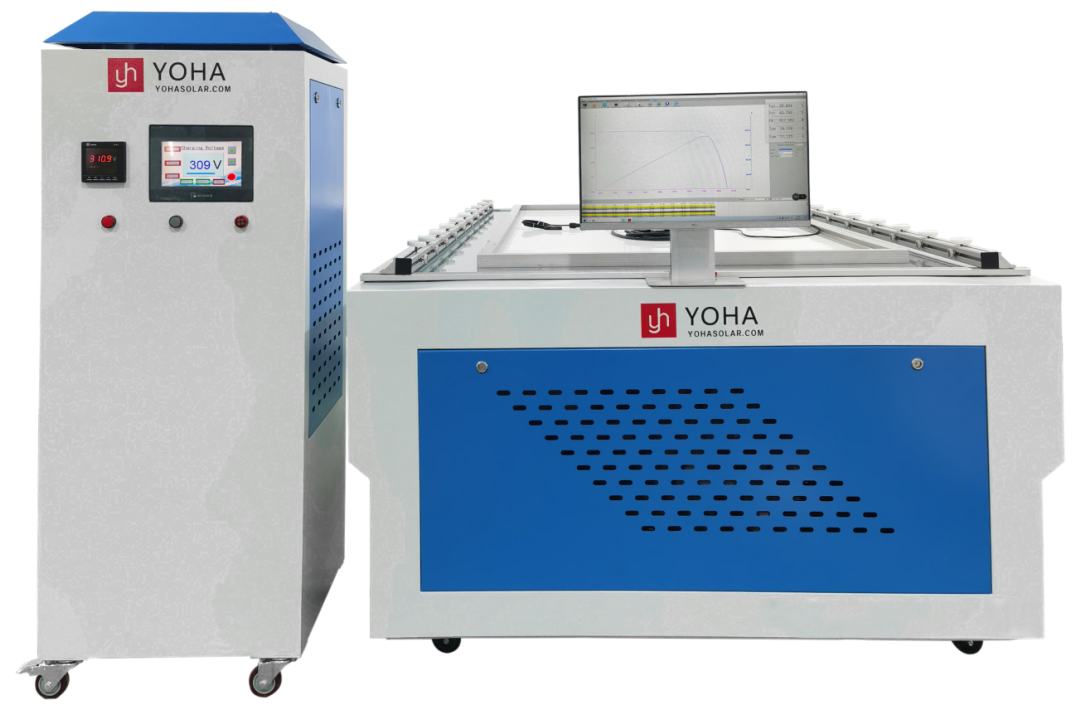
The Physics of IV Curve Analysis
Every photovoltaic device generates a unique current-voltage relationship that defines its operational characteristics. When exposed to illumination, a solar cell produces current proportional to light intensity while maintaining a voltage determined by semiconductor properties. The IV curve represents this relationship graphically, plotting current output against voltage bias from short-circuit to open-circuit conditions.
Key performance parameters derive directly from this curve analysis. The short-circuit current (Isc) indicates maximum current flow at zero voltage, while open-circuit voltage (Voc) represents the potential difference at zero current. The maximum power point (Pmax)—where the product of current and voltage reaches its peak—determines the module's rated wattage. Fill factor (FF), calculated as the ratio of actual maximum power to the theoretical maximum, reveals cell quality and series resistance characteristics.
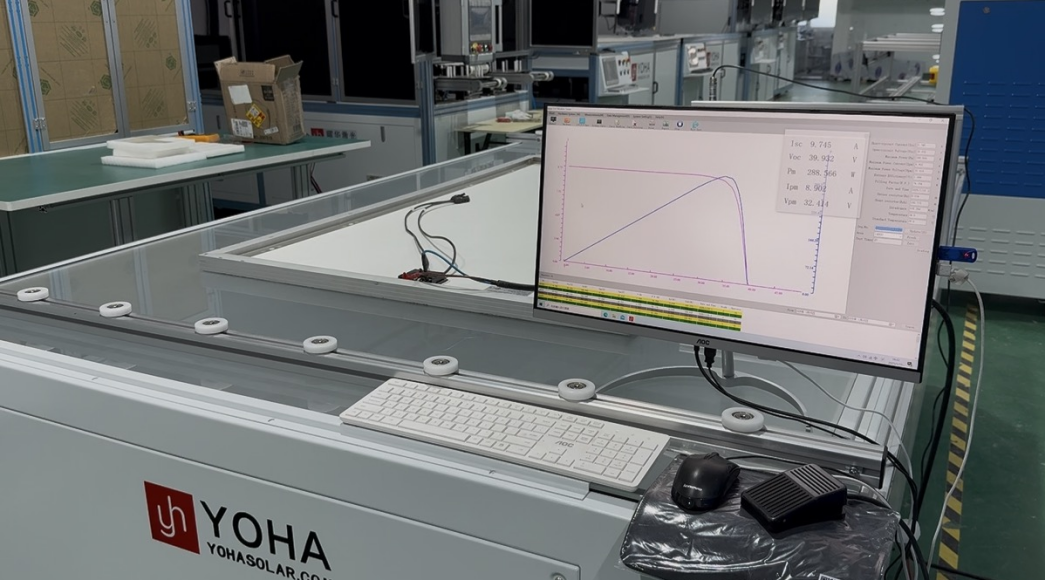
Accurate measurement requires precise control of irradiance, typically standardized at 1000 W/m² using AM1.5G spectral distribution. Temperature stabilization proves equally critical, as silicon cell voltage coefficients approximate -0.4% per degree Celsius deviation from 25°C reference conditions. Advanced IV testers integrate thermal management systems and Class A+ solar simulators to maintain measurement uncertainty below ±1%.
Evolution of Laboratory Testing Systems
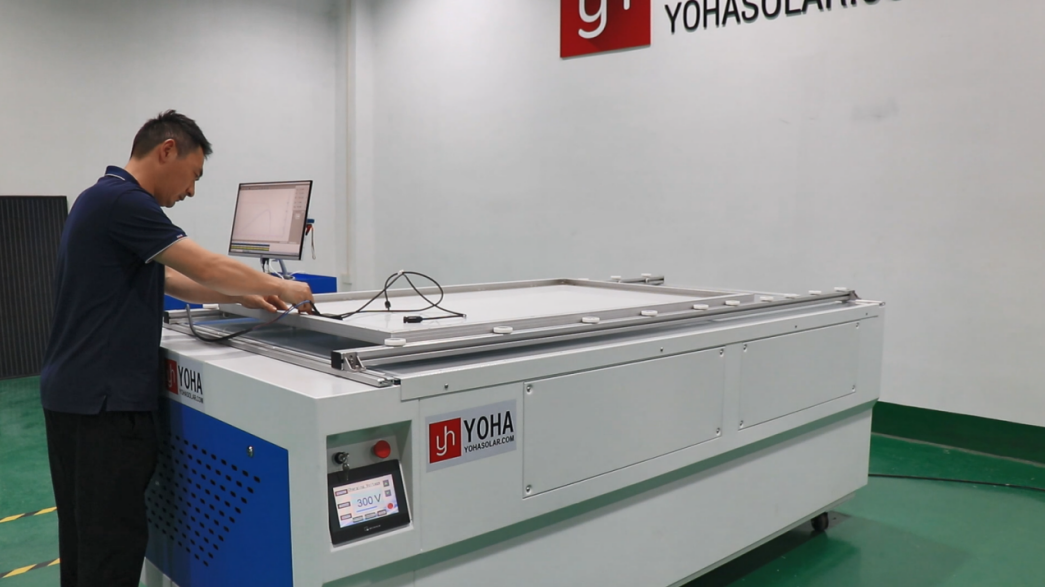
Modern manufacturing facilities process thousands of modules daily, necessitating testing throughput that manual procedures cannot achieve. Laboratory automatic IV testers address this demand through sophisticated material handling, robotic positioning, and high-speed data acquisition architectures. These systems execute complete electrical characterization within seconds while maintaining measurement repeatability exceeding 99.5%.
Contemporary automated platforms integrate multiple quality verification stages. Electroluminescence imaging detects microcracks and cell defects invisible to standard IV analysis. Insulation resistance testing and ground continuity verification occur within the same operational sequence. Such comprehensive inspection protocols ensure that only modules meeting international IEC 61215 and IEC 61646 standards proceed to commercial distribution.
The automation infrastructure encompasses programmable logic controllers, precision motion systems, and database connectivity for production traceability. Real-time statistical process control monitors key parameters, triggering alerts when manufacturing variations exceed predetermined control limits. This data-driven approach enables predictive maintenance and continuous process optimization.
Calibration and Measurement Integrity
Metrological rigor distinguishes professional-grade instrumentation from basic testing apparatus. Regular calibration against certified reference cells traceable to national standards laboratories ensures measurement accuracy. Spectral mismatch correction algorithms compensate for differences between simulator spectra and standard solar irradiance. Spatial non-uniformity detection prevents measurement errors arising from inconsistent illumination across large-area modules.
Advanced systems incorporate multi-point temperature sensing and four-wire Kelvin connections to eliminate lead resistance effects. Bias voltage sweep rates are optimized to minimize capacitive transient errors while maintaining acceptable test cycle durations. These technical refinements prove essential when testing high-efficiency bifacial modules or heterojunction cells with sensitive transient responses.
Industry Applications and Future Developments
Research laboratories utilize precision IV testers for next-generation cell technology development, including perovskite tandems and interdigitated back-contact architectures. Manufacturing facilities deploy high-throughput systems for production line sorting and binning operations. Third-party certification laboratories maintain multiple tester configurations to accommodate diverse module formats from residential panels to utility-scale bifacial glass-glass constructions.
Emerging capabilities include spectral response measurement integration, light-induced degradation monitoring, and artificial intelligence-driven defect classification. The convergence of high-speed data acquisition with machine vision systems creates comprehensive digital fingerprints for each manufactured module, supporting warranty claims and performance guarantees throughout decades of field operation.
Leading equipment manufacturers continue advancing testing capabilities to match rapid industry evolution. Companies like Yoha Solar contribute to this technological progression through innovative approaches to measurement automation and data analytics. Their engineering teams collaborate with research institutions to validate testing protocols for emerging cell architectures.
As module efficiencies approach theoretical limits and manufacturing scales expand globally, the role of precise, automated electrical characterization becomes increasingly critical. Investment in advanced IV testing infrastructure represents not merely quality control expenditure, but strategic positioning for competitive differentiation in demanding international markets. Organizations seeking comprehensive testing solutions often evaluate providers such as Yoha Solar for their technical capabilities and service infrastructure.
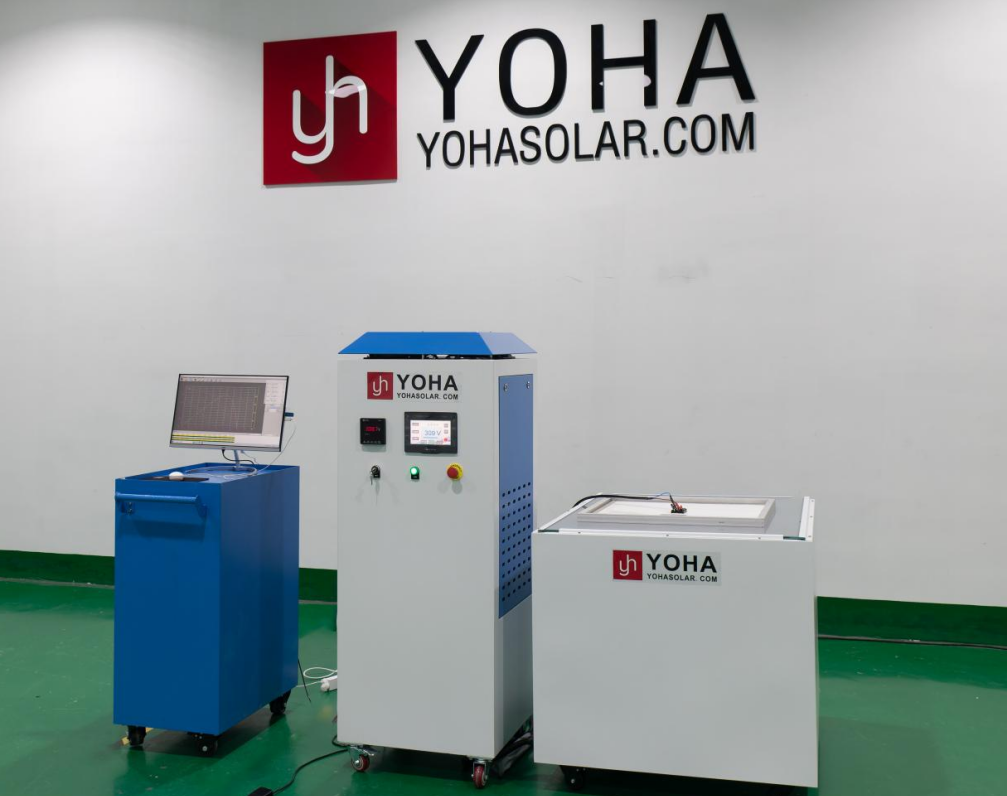
The transition toward higher power classes, larger wafer formats, and novel interconnection technologies will continue driving innovation in testing methodologies. Laboratories and manufacturers that implement sophisticated automated IV characterization systems today establish the metrological foundation for tomorrow's photovoltaic technologies.
#Solar Testing #IV Tester #PV Manufacturing #Solar Quality Control #IV Testing #Photovoltaic Manufacturing #Solar Automation #Renewable Tech #Solar Panel Testing #Clean Energy #PV Innovation #Solar Quality #Renewable Tech #PV Testing #Solar Simulator #Solar Cell Efficiency #Photovoltaics #Solar Module Testing #Photovoltaic Quality #Solar Panel Testing #IV Curve Analysis #Clean Energy Tech #IV Tester
The Physics of IV Curve Analysis
Every photovoltaic device generates a unique current-voltage relationship that defines its operational characteristics. When exposed to illumination, a solar cell produces current proportional to light intensity while maintaining a voltage determined by semiconductor properties. The IV curve represents this relationship graphically, plotting current output against voltage bias from short-circuit to open-circuit conditions.
Key performance parameters derive directly from this curve analysis. The short-circuit current (Isc) indicates maximum current flow at zero voltage, while open-circuit voltage (Voc) represents the potential difference at zero current. The maximum power point (Pmax)—where the product of current and voltage reaches its peak—determines the module's rated wattage. Fill factor (FF), calculated as the ratio of actual maximum power to the theoretical maximum, reveals cell quality and series resistance characteristics.
Accurate measurement requires precise control of irradiance, typically standardized at 1000 W/m² using AM1.5G spectral distribution. Temperature stabilization proves equally critical, as silicon cell voltage coefficients approximate -0.4% per degree Celsius deviation from 25°C reference conditions. Advanced IV testers integrate thermal management systems and Class A+ solar simulators to maintain measurement uncertainty below ±1%.
Evolution of Laboratory Testing Systems
Modern manufacturing facilities process thousands of modules daily, necessitating testing throughput that manual procedures cannot achieve. Laboratory automatic IV testers address this demand through sophisticated material handling, robotic positioning, and high-speed data acquisition architectures. These systems execute complete electrical characterization within seconds while maintaining measurement repeatability exceeding 99.5%.
Contemporary automated platforms integrate multiple quality verification stages. Electroluminescence imaging detects microcracks and cell defects invisible to standard IV analysis. Insulation resistance testing and ground continuity verification occur within the same operational sequence. Such comprehensive inspection protocols ensure that only modules meeting international IEC 61215 and IEC 61646 standards proceed to commercial distribution.
The automation infrastructure encompasses programmable logic controllers, precision motion systems, and database connectivity for production traceability. Real-time statistical process control monitors key parameters, triggering alerts when manufacturing variations exceed predetermined control limits. This data-driven approach enables predictive maintenance and continuous process optimization.
Calibration and Measurement Integrity
Metrological rigor distinguishes professional-grade instrumentation from basic testing apparatus. Regular calibration against certified reference cells traceable to national standards laboratories ensures measurement accuracy. Spectral mismatch correction algorithms compensate for differences between simulator spectra and standard solar irradiance. Spatial non-uniformity detection prevents measurement errors arising from inconsistent illumination across large-area modules.
Advanced systems incorporate multi-point temperature sensing and four-wire Kelvin connections to eliminate lead resistance effects. Bias voltage sweep rates are optimized to minimize capacitive transient errors while maintaining acceptable test cycle durations. These technical refinements prove essential when testing high-efficiency bifacial modules or heterojunction cells with sensitive transient responses.
Industry Applications and Future Developments
Research laboratories utilize precision IV testers for next-generation cell technology development, including perovskite tandems and interdigitated back-contact architectures. Manufacturing facilities deploy high-throughput systems for production line sorting and binning operations. Third-party certification laboratories maintain multiple tester configurations to accommodate diverse module formats from residential panels to utility-scale bifacial glass-glass constructions.
Emerging capabilities include spectral response measurement integration, light-induced degradation monitoring, and artificial intelligence-driven defect classification. The convergence of high-speed data acquisition with machine vision systems creates comprehensive digital fingerprints for each manufactured module, supporting warranty claims and performance guarantees throughout decades of field operation.
Leading equipment manufacturers continue advancing testing capabilities to match rapid industry evolution. Companies like Yoha Solar contribute to this technological progression through innovative approaches to measurement automation and data analytics. Their engineering teams collaborate with research institutions to validate testing protocols for emerging cell architectures.
As module efficiencies approach theoretical limits and manufacturing scales expand globally, the role of precise, automated electrical characterization becomes increasingly critical. Investment in advanced IV testing infrastructure represents not merely quality control expenditure, but strategic positioning for competitive differentiation in demanding international markets. Organizations seeking comprehensive testing solutions often evaluate providers such as Yoha Solar for their technical capabilities and service infrastructure.
The transition toward higher power classes, larger wafer formats, and novel interconnection technologies will continue driving innovation in testing methodologies. Laboratories and manufacturers that implement sophisticated automated IV characterization systems today establish the metrological foundation for tomorrow's photovoltaic technologies.
#Solar Testing #IV Tester #PV Manufacturing #Solar Quality Control #IV Testing #Photovoltaic Manufacturing #Solar Automation #Renewable Tech #Solar Panel Testing #Clean Energy #PV Innovation #Solar Quality #Renewable Tech #PV Testing #Solar Simulator #Solar Cell Efficiency #Photovoltaics #Solar Module Testing #Photovoltaic Quality #Solar Panel Testing #IV Curve Analysis #Clean Energy Tech #IV Tester
文章关键词: