
Yoha Solar Panel IV Tester: Advancing Precision in Photovoltaic Characterization
Modern solar manufacturing relies on sophisticated instrumentation to verify module performance before deployment. The Current-Voltage (IV) tester stands as the primary tool for quantifying electrical output, identifying defects, and ensuring compliance with international standards. This analysis examines measurement principles and laboratory automation, with focus on integrated solutions from industry specialists.
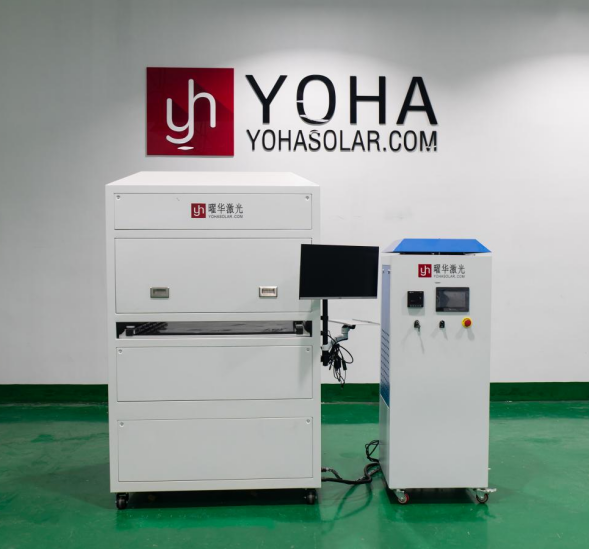
Electrical Characterization Fundamentals
Photovoltaic devices generate direct current when exposed to illumination, with output characteristics governed by semiconductor junction physics. IV testing captures this behavior by sweeping applied voltage across the device terminals while recording resultant current flow. The resulting curve traces performance from short-circuit conditions through open-circuit voltage limits.
Engineers extract critical parameters through computational analysis. Maximum power output determines module rating and economic value. Fill factor indicates manufacturing quality, with higher values reflecting superior conductor optimization and minimal parasitic losses. Voltage temperature coefficients prove essential for predicting energy yield across diverse operating environments.
Accurate measurement demands precise environmental control. Irradiance levels must stabilize at 1000 W/m² with AM1.5G spectral distribution. Cell temperature requires maintenance at 25°C reference conditions, necessitating thermal management systems or rapid measurement protocols that minimize heating effects during illumination exposure.
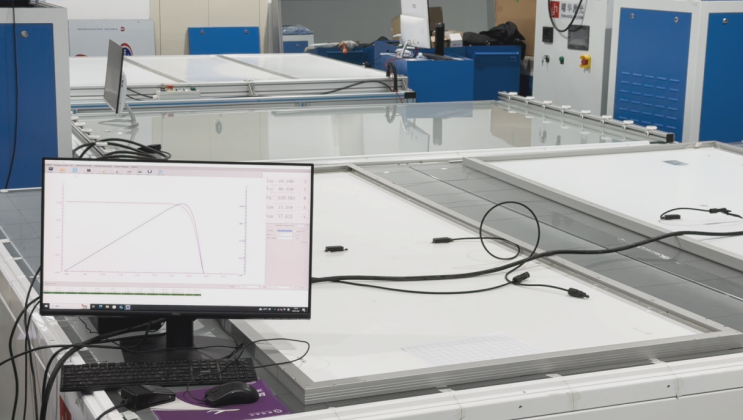
Laboratory Automation Architectures
High-volume manufacturing facilities process thousands of modules daily, requiring testing throughput impossible through manual methods. Automated IV testers integrate robotic material handling, precision positioning, and high-speed data acquisition into continuous workflows. These systems execute complete electrical characterization within seconds while maintaining statistical repeatability exceeding 99%.
Contemporary platforms incorporate multiple verification stages within unified operational sequences. Electrical safety testing, including insulation resistance and ground continuity verification, precedes or follows power characterization. Advanced configurations integrate electroluminescence imaging to detect microcracks and cell defects invisible to standard IV analysis.
Control software manages test protocols, data logging, and manufacturing system integration. Real-time statistical process control monitors key parameters, automatically flagging production variations exceeding control limits. Comprehensive databases enable traceability from individual modules through material batches and production shifts.
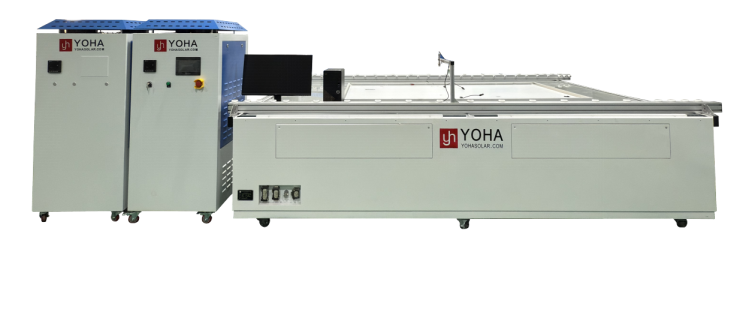
Optical System Engineering
Light source quality fundamentally constrains measurement accuracy. Flash simulators utilize xenon arc discharge to approximate solar spectra, while steady-state systems employ metal-halide or LED arrays. Spectral mismatch correction algorithms compensate for deviations between simulator output and standard reference spectra.
Large-format modules demand exceptional spatial uniformity—typically ±2% variation across testing areas exceeding two square meters. Optical designs incorporating integrating cavities and homogenization filters achieve this consistency. Periodic calibration using certified reference cells traceable to national standards ensures measurement integrity.
Product Implementation and Capabilities
Equipment selection balances precision requirements, throughput demands, and integration constraints. Research environments prioritize measurement accuracy and configurability, accepting extended test durations for comprehensive characterization. Production facilities emphasize reliability and velocity, with measurement uncertainty targets typically specified at ±2% for sorting applications.
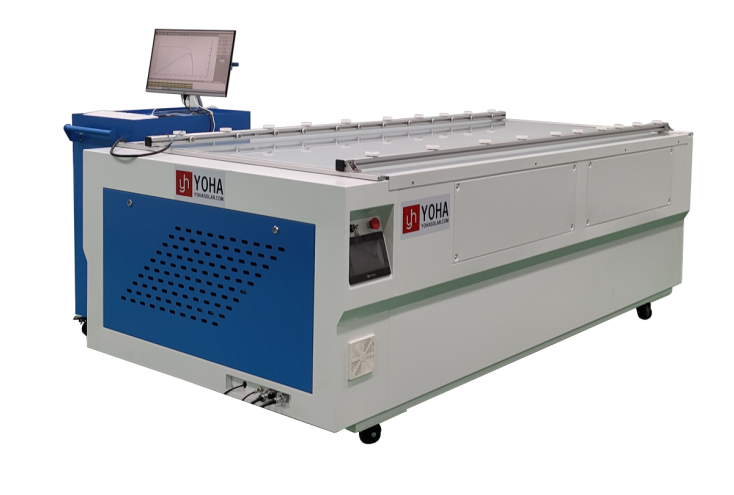
Several manufacturers specialize in this technical domain. Yoha Solar offers integrated automation solutions combining precision metrology with adaptable material handling. Their Yoha Solar Panel IV Tester configurations accommodate diverse module formats, from standard residential panels to utility-scale bifacial constructions and emerging flexible thin-film products.
The Yoha Solar Panel IV Tester platform architecture addresses contemporary manufacturing challenges through high-speed data acquisition and intelligent diagnostic algorithms. System configurations range from standalone laboratory instruments to fully integrated production line solutions with automated conveyor interfaces and robotic handling systems.
Emerging Technical Directions
Next-generation cell technologies introduce novel measurement requirements. Heterojunction and TOPCon architectures exhibit sensitive transient responses necessitating optimized voltage sweep rates. Perovskite-silicon tandems demand spectral tuning capabilities beyond conventional simulator designs. Bifacial modules require dual-sided illumination or rear-side reflectance characterization.
Artificial intelligence integration enables predictive maintenance and automated defect classification. Machine vision systems create comprehensive digital fingerprints supporting lifetime performance tracking. These capabilities transform testing from quality control checkpoints into strategic manufacturing intelligence sources.
Investment in advanced characterization infrastructure positions manufacturers for competitive differentiation. As module efficiencies approach theoretical limits and production scales expand globally, precise automated testing becomes increasingly critical for market leadership and warranty compliance.
#Solar Testing #IV Tester #PV Manufacturing #Solar Quality Control #IV Testing #Photovoltaic Manufacturing #Solar Automation #Renewable Tech #Solar Panel Testing #Clean Energy #PV Innovation #Solar Quality #Renewable Tech #PV Testing #Solar Simulator #Solar Cell Efficiency #Photovoltaics #Solar Module Testing #Photovoltaic Quality #Solar Panel Testing #IV Curve Analysis #Clean Energy Tech #IV Tester
Electrical Characterization Fundamentals
Photovoltaic devices generate direct current when exposed to illumination, with output characteristics governed by semiconductor junction physics. IV testing captures this behavior by sweeping applied voltage across the device terminals while recording resultant current flow. The resulting curve traces performance from short-circuit conditions through open-circuit voltage limits.
Engineers extract critical parameters through computational analysis. Maximum power output determines module rating and economic value. Fill factor indicates manufacturing quality, with higher values reflecting superior conductor optimization and minimal parasitic losses. Voltage temperature coefficients prove essential for predicting energy yield across diverse operating environments.
Accurate measurement demands precise environmental control. Irradiance levels must stabilize at 1000 W/m² with AM1.5G spectral distribution. Cell temperature requires maintenance at 25°C reference conditions, necessitating thermal management systems or rapid measurement protocols that minimize heating effects during illumination exposure.
Laboratory Automation Architectures
High-volume manufacturing facilities process thousands of modules daily, requiring testing throughput impossible through manual methods. Automated IV testers integrate robotic material handling, precision positioning, and high-speed data acquisition into continuous workflows. These systems execute complete electrical characterization within seconds while maintaining statistical repeatability exceeding 99%.
Contemporary platforms incorporate multiple verification stages within unified operational sequences. Electrical safety testing, including insulation resistance and ground continuity verification, precedes or follows power characterization. Advanced configurations integrate electroluminescence imaging to detect microcracks and cell defects invisible to standard IV analysis.
Control software manages test protocols, data logging, and manufacturing system integration. Real-time statistical process control monitors key parameters, automatically flagging production variations exceeding control limits. Comprehensive databases enable traceability from individual modules through material batches and production shifts.
Optical System Engineering
Light source quality fundamentally constrains measurement accuracy. Flash simulators utilize xenon arc discharge to approximate solar spectra, while steady-state systems employ metal-halide or LED arrays. Spectral mismatch correction algorithms compensate for deviations between simulator output and standard reference spectra.
Large-format modules demand exceptional spatial uniformity—typically ±2% variation across testing areas exceeding two square meters. Optical designs incorporating integrating cavities and homogenization filters achieve this consistency. Periodic calibration using certified reference cells traceable to national standards ensures measurement integrity.
Product Implementation and Capabilities
Equipment selection balances precision requirements, throughput demands, and integration constraints. Research environments prioritize measurement accuracy and configurability, accepting extended test durations for comprehensive characterization. Production facilities emphasize reliability and velocity, with measurement uncertainty targets typically specified at ±2% for sorting applications.
Several manufacturers specialize in this technical domain. Yoha Solar offers integrated automation solutions combining precision metrology with adaptable material handling. Their Yoha Solar Panel IV Tester configurations accommodate diverse module formats, from standard residential panels to utility-scale bifacial constructions and emerging flexible thin-film products.
The Yoha Solar Panel IV Tester platform architecture addresses contemporary manufacturing challenges through high-speed data acquisition and intelligent diagnostic algorithms. System configurations range from standalone laboratory instruments to fully integrated production line solutions with automated conveyor interfaces and robotic handling systems.
Emerging Technical Directions
Next-generation cell technologies introduce novel measurement requirements. Heterojunction and TOPCon architectures exhibit sensitive transient responses necessitating optimized voltage sweep rates. Perovskite-silicon tandems demand spectral tuning capabilities beyond conventional simulator designs. Bifacial modules require dual-sided illumination or rear-side reflectance characterization.
Artificial intelligence integration enables predictive maintenance and automated defect classification. Machine vision systems create comprehensive digital fingerprints supporting lifetime performance tracking. These capabilities transform testing from quality control checkpoints into strategic manufacturing intelligence sources.
Investment in advanced characterization infrastructure positions manufacturers for competitive differentiation. As module efficiencies approach theoretical limits and production scales expand globally, precise automated testing becomes increasingly critical for market leadership and warranty compliance.
#Solar Testing #IV Tester #PV Manufacturing #Solar Quality Control #IV Testing #Photovoltaic Manufacturing #Solar Automation #Renewable Tech #Solar Panel Testing #Clean Energy #PV Innovation #Solar Quality #Renewable Tech #PV Testing #Solar Simulator #Solar Cell Efficiency #Photovoltaics #Solar Module Testing #Photovoltaic Quality #Solar Panel Testing #IV Curve Analysis #Clean Energy Tech #IV Tester
文章关键词: