
The Invisible Gatekeeper: How Yoha Solar Panel IV Testers Shape the Future of Photovoltaic Quality
Behind every solar installation generating clean electricity stands an invisible guardian—precision instrumentation that determined whether those modules deserved deployment. Current-Voltage (IV) testing represents this critical gatekeeping function, separating exceptional products from compromised components before they reach global markets. Understanding this technology reveals why leading manufacturers entrust their reputations to sophisticated laboratory automation.
The Physics of Performance Verification
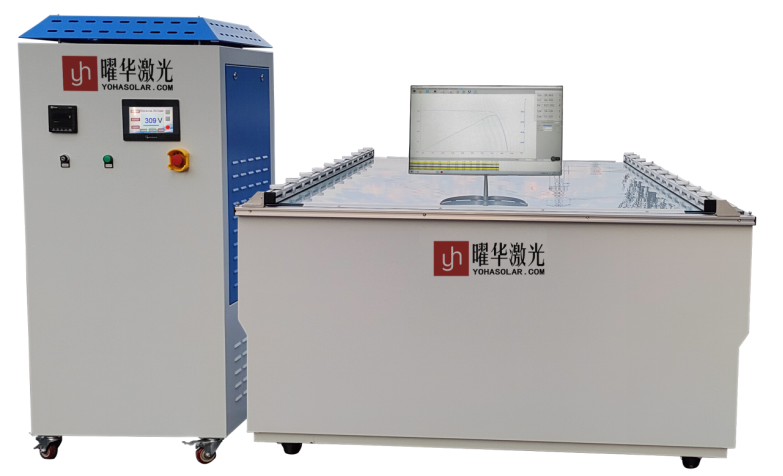
Solar cells transform photons into electrical current through semiconductor junctions, yet manufacturing variations create significant output disparities. IV characterization quantifies these differences by mapping current response across voltage ranges. The resulting curve signature contains encoded information about conversion efficiency, resistance losses, and potential degradation mechanisms.
Key metrics determine commercial viability. Maximum power point defines rated wattage and economic value. Fill factor reveals manufacturing precision—high values indicate optimal conductor design and minimal parasitic effects. Temperature coefficients predict performance across climatic extremes from desert installations to northern latitudes.
Measurement integrity demands environmental mastery. Irradiance must replicate standard solar conditions at 1000 W/m² with precise spectral distribution. Thermal stabilization prevents measurement drift during characterization cycles. These requirements exceed casual laboratory capabilities, necessitating engineered solutions with sophisticated environmental simulation.
Automation Revolutionizing Throughput
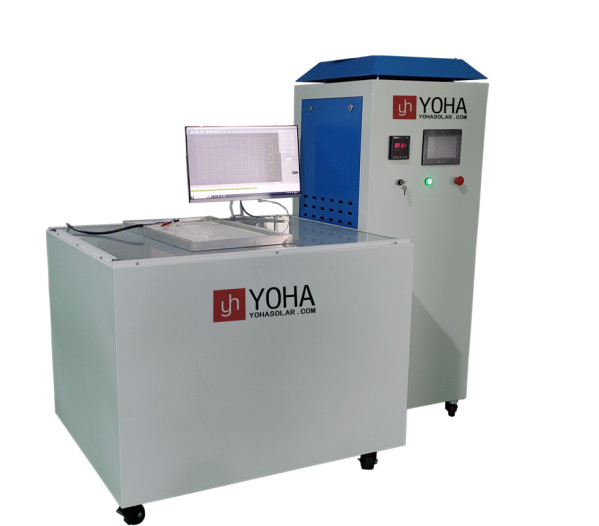
Contemporary manufacturing facilities operate at velocities rendering manual testing economically impossible. Automated IV systems integrate robotic handling, precision positioning, and high-speed acquisition into seamless workflows. Complete electrical characterization executes within seconds while maintaining statistical repeatability that manual procedures cannot achieve.
Modern architectures unify multiple verification modalities. Electrical safety testing precedes power characterization. Electroluminescence imaging captures infrared emission patterns revealing microfractures invisible to standard analysis. This comprehensive inspection ensures only modules meeting IEC 61215 and IEC 61646 standards proceed to customer delivery.
Software ecosystems manage protocol execution and manufacturing integration. Real-time statistical monitoring identifies process variations before they generate defective products. Historical databases enable predictive maintenance and continuous optimization across production shifts and material lots.
Optical Engineering Discipline
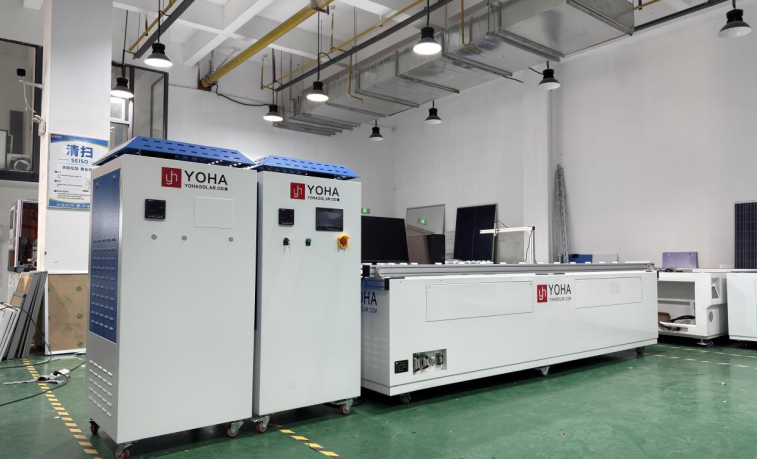
Light source quality fundamentally constrains measurement certainty. Flash simulators employ xenon arc discharge approximating solar spectra, while steady-state systems utilize metal-halide or LED arrays. Spectral mismatch correction compensates for deviations between simulator output and reference conditions.
Spatial uniformity presents particular challenges for large-format modules. Variation must remain within ±2% across areas exceeding two square meters. Optical designs incorporating integrating cavities and homogenization filters achieve this consistency. Periodic calibration against certified reference cells maintains traceability to national standards.
Integrated Solutions and Implementation
Equipment selection balances precision requirements, throughput demands, and operational constraints. Research laboratories prioritize configurability and accuracy. Production environments emphasize reliability and velocity, accepting pragmatic uncertainty trade-offs for sorting efficiency.
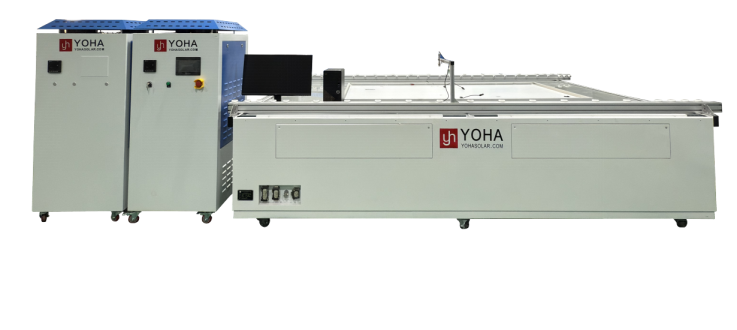
Specialized providers address these diverse requirements through adaptable platform architectures. Yoha Solar delivers comprehensive automation solutions integrating precision metrology with intelligent material handling. Their Yoha Solar Panel IV Tester configurations span standalone laboratory instruments to fully integrated production systems.
The Yoha Solar Panel IV Tester platform accommodates evolving industry formats—from conventional residential panels to utility-scale bifacial constructions and emerging flexible architectures. Engineering teams continuously refine capabilities addressing next-generation cell technologies including heterojunction and tandem configurations.
Forward Trajectory
As photovoltaic manufacturing scales toward terawatt annual production, testing infrastructure must evolve proportionally. Artificial intelligence integration enables automated defect classification and predictive maintenance. Machine vision systems generate comprehensive digital fingerprints supporting decades-long performance tracking.
The invisible gatekeeping function grows increasingly consequential as module deployments accelerate globally. Manufacturers investing in advanced characterization capabilities today establish foundations for quality leadership tomorrow. Precision instrumentation from established providers ensures this critical verification proceeds with speed, accuracy, and unwavering reliability.
#Solar Testing #IV Tester #PV Manufacturing #Solar Quality Control #IV Testing #Photovoltaic Manufacturing #Solar Automation #Renewable Tech #Solar Panel Testing #Clean Energy #PV Innovation #Solar Quality #Renewable Tech #PV Testing #Solar Simulator #Solar Cell Efficiency #Photovoltaics #Solar Module Testing #Photovoltaic Quality #Solar Panel Testing #IV Curve Analysis #Clean Energy Tech #IV Tester
The Physics of Performance Verification
Solar cells transform photons into electrical current through semiconductor junctions, yet manufacturing variations create significant output disparities. IV characterization quantifies these differences by mapping current response across voltage ranges. The resulting curve signature contains encoded information about conversion efficiency, resistance losses, and potential degradation mechanisms.
Key metrics determine commercial viability. Maximum power point defines rated wattage and economic value. Fill factor reveals manufacturing precision—high values indicate optimal conductor design and minimal parasitic effects. Temperature coefficients predict performance across climatic extremes from desert installations to northern latitudes.
Measurement integrity demands environmental mastery. Irradiance must replicate standard solar conditions at 1000 W/m² with precise spectral distribution. Thermal stabilization prevents measurement drift during characterization cycles. These requirements exceed casual laboratory capabilities, necessitating engineered solutions with sophisticated environmental simulation.
Automation Revolutionizing Throughput
Contemporary manufacturing facilities operate at velocities rendering manual testing economically impossible. Automated IV systems integrate robotic handling, precision positioning, and high-speed acquisition into seamless workflows. Complete electrical characterization executes within seconds while maintaining statistical repeatability that manual procedures cannot achieve.
Modern architectures unify multiple verification modalities. Electrical safety testing precedes power characterization. Electroluminescence imaging captures infrared emission patterns revealing microfractures invisible to standard analysis. This comprehensive inspection ensures only modules meeting IEC 61215 and IEC 61646 standards proceed to customer delivery.
Software ecosystems manage protocol execution and manufacturing integration. Real-time statistical monitoring identifies process variations before they generate defective products. Historical databases enable predictive maintenance and continuous optimization across production shifts and material lots.
Optical Engineering Discipline
Light source quality fundamentally constrains measurement certainty. Flash simulators employ xenon arc discharge approximating solar spectra, while steady-state systems utilize metal-halide or LED arrays. Spectral mismatch correction compensates for deviations between simulator output and reference conditions.
Spatial uniformity presents particular challenges for large-format modules. Variation must remain within ±2% across areas exceeding two square meters. Optical designs incorporating integrating cavities and homogenization filters achieve this consistency. Periodic calibration against certified reference cells maintains traceability to national standards.
Integrated Solutions and Implementation
Equipment selection balances precision requirements, throughput demands, and operational constraints. Research laboratories prioritize configurability and accuracy. Production environments emphasize reliability and velocity, accepting pragmatic uncertainty trade-offs for sorting efficiency.
Specialized providers address these diverse requirements through adaptable platform architectures. Yoha Solar delivers comprehensive automation solutions integrating precision metrology with intelligent material handling. Their Yoha Solar Panel IV Tester configurations span standalone laboratory instruments to fully integrated production systems.
The Yoha Solar Panel IV Tester platform accommodates evolving industry formats—from conventional residential panels to utility-scale bifacial constructions and emerging flexible architectures. Engineering teams continuously refine capabilities addressing next-generation cell technologies including heterojunction and tandem configurations.
Forward Trajectory
As photovoltaic manufacturing scales toward terawatt annual production, testing infrastructure must evolve proportionally. Artificial intelligence integration enables automated defect classification and predictive maintenance. Machine vision systems generate comprehensive digital fingerprints supporting decades-long performance tracking.
The invisible gatekeeping function grows increasingly consequential as module deployments accelerate globally. Manufacturers investing in advanced characterization capabilities today establish foundations for quality leadership tomorrow. Precision instrumentation from established providers ensures this critical verification proceeds with speed, accuracy, and unwavering reliability.
#Solar Testing #IV Tester #PV Manufacturing #Solar Quality Control #IV Testing #Photovoltaic Manufacturing #Solar Automation #Renewable Tech #Solar Panel Testing #Clean Energy #PV Innovation #Solar Quality #Renewable Tech #PV Testing #Solar Simulator #Solar Cell Efficiency #Photovoltaics #Solar Module Testing #Photovoltaic Quality #Solar Panel Testing #IV Curve Analysis #Clean Energy Tech #IV Tester
文章关键词: