
Precision at Scale: The Yoha Solar Panel IV Tester Advantage
Solar module manufacturing demands unwavering quality verification before products reach global installations. Current-Voltage (IV) testing serves as the definitive gatekeeping mechanism, quantifying electrical performance and identifying defects invisible to visual inspection. Understanding this technology reveals why automated laboratory systems have become indispensable industry infrastructure.
Measurement Fundamentals
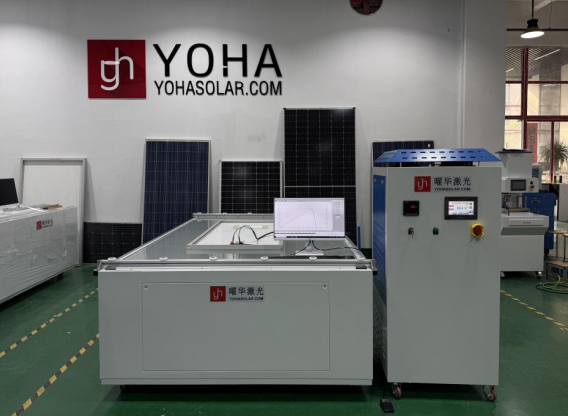
Photovoltaic devices convert incident photons into direct current through semiconductor junction physics. IV characterization captures this energy conversion by sweeping applied voltage while recording resultant current flow. The resulting curve yields critical parameters: maximum power point determines commercial rating, fill factor indicates manufacturing quality, and temperature coefficients predict climatic performance variations.
Standard Test Conditions provide measurement uniformity—1000 W/m² irradiance with AM1.5G spectral distribution at 25°C cell temperature. Achieving these parameters simultaneously requires sophisticated environmental simulation capabilities beyond basic laboratory equipment.
Automation Architecture
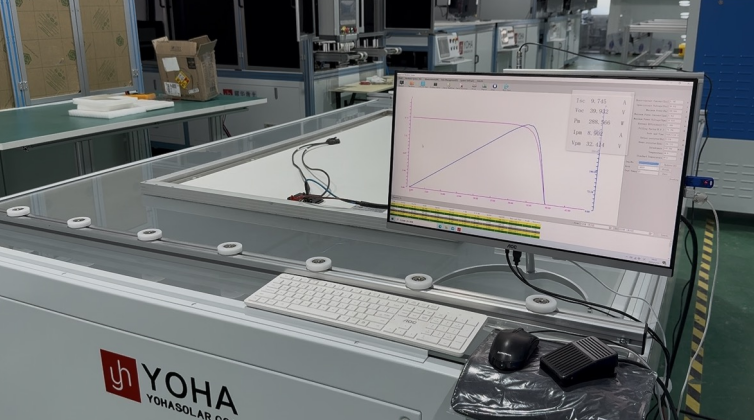
High-volume facilities process thousands of modules daily, necessitating testing throughput impossible through manual methods. Automated systems integrate robotic handling, precision positioning, and high-speed data acquisition into synchronized workflows. Complete characterization executes within seconds while maintaining statistical repeatability exceeding 99%.
Contemporary platforms unify multiple verification stages. Electrical safety testing and electroluminescence imaging complement power characterization, ensuring comprehensive quality assessment. Real-time statistical monitoring identifies process variations before defective products advance through production.
Optical Engineering Excellence
Measurement accuracy depends fundamentally on light source quality. Flash simulators utilize xenon arc discharge approximating solar spectra, while steady-state systems employ metal-halide or LED arrays. Spectral mismatch correction compensates for deviations from standard reference conditions.
Large-format modules demand exceptional spatial uniformity—typically ±2% variation across testing areas exceeding two square meters. Integrating cavities and homogenization filters achieve this consistency, with periodic calibration maintaining traceability to national standards.
Integrated Solutions
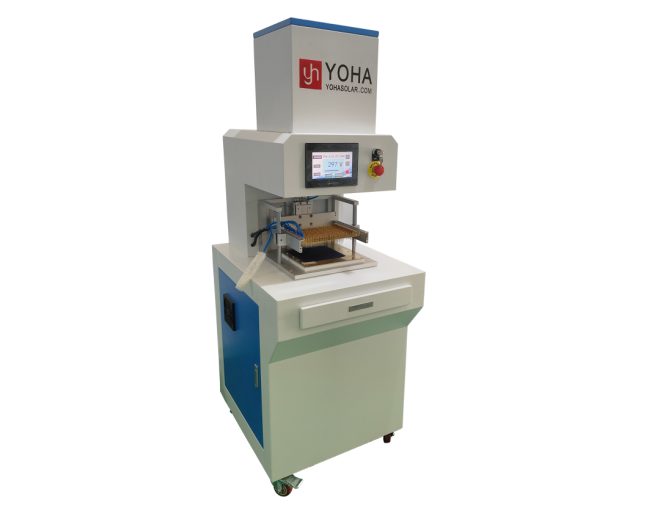
Equipment selection balances precision requirements, throughput demands, and operational constraints. Yoha Solar addresses these diverse needs through adaptable platform architectures. Their Yoha Solar Solar Panel IV Tester configurations span standalone laboratory instruments to fully integrated production systems with robotic handling.
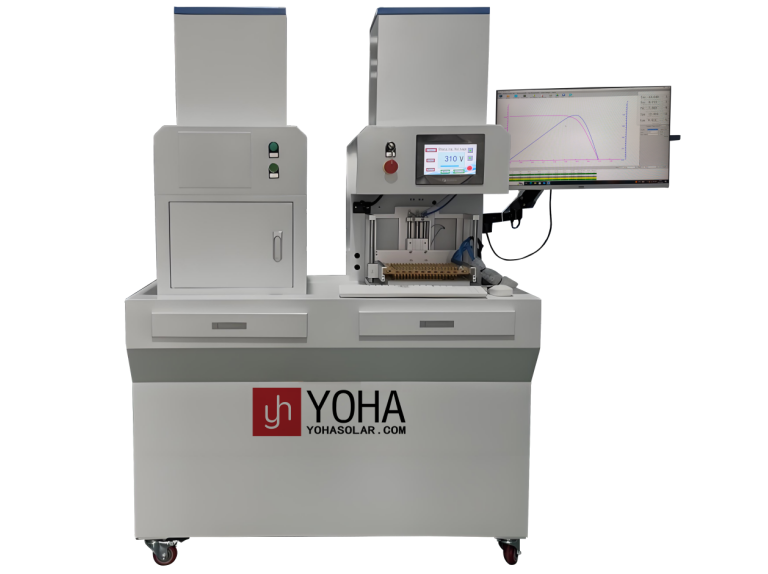
The Yoha Solar Solar Panel IV Tester accommodates evolving industry formats—from conventional residential panels to utility-scale bifacial constructions. Engineering teams continuously refine capabilities addressing emerging cell technologies including heterojunction and perovskite-silicon tandems.
As photovoltaic manufacturing scales toward terawatt annual production, testing infrastructure must evolve proportionally. Advanced characterization capabilities establish foundations for quality leadership in increasingly competitive global markets.
#Solar Testing #IV Tester #PV Manufacturing #Solar Quality Control #IV Testing #Photovoltaic Manufacturing #Solar Automation #Renewable Tech #Solar Panel Testing #Clean Energy #PV Innovation #Solar Quality #Renewable Tech #PV Testing #Solar Simulator #Solar Cell Efficiency #Photovoltaics #Solar Module Testing #Photovoltaic Quality #Solar Panel Testing #IV Curve Analysis #Clean Energy Tech #IV Tester
文章关键词: