Enhancing Production Yield with Yoha Solar: The Role of Precision Metrology in 5-100MW Lines
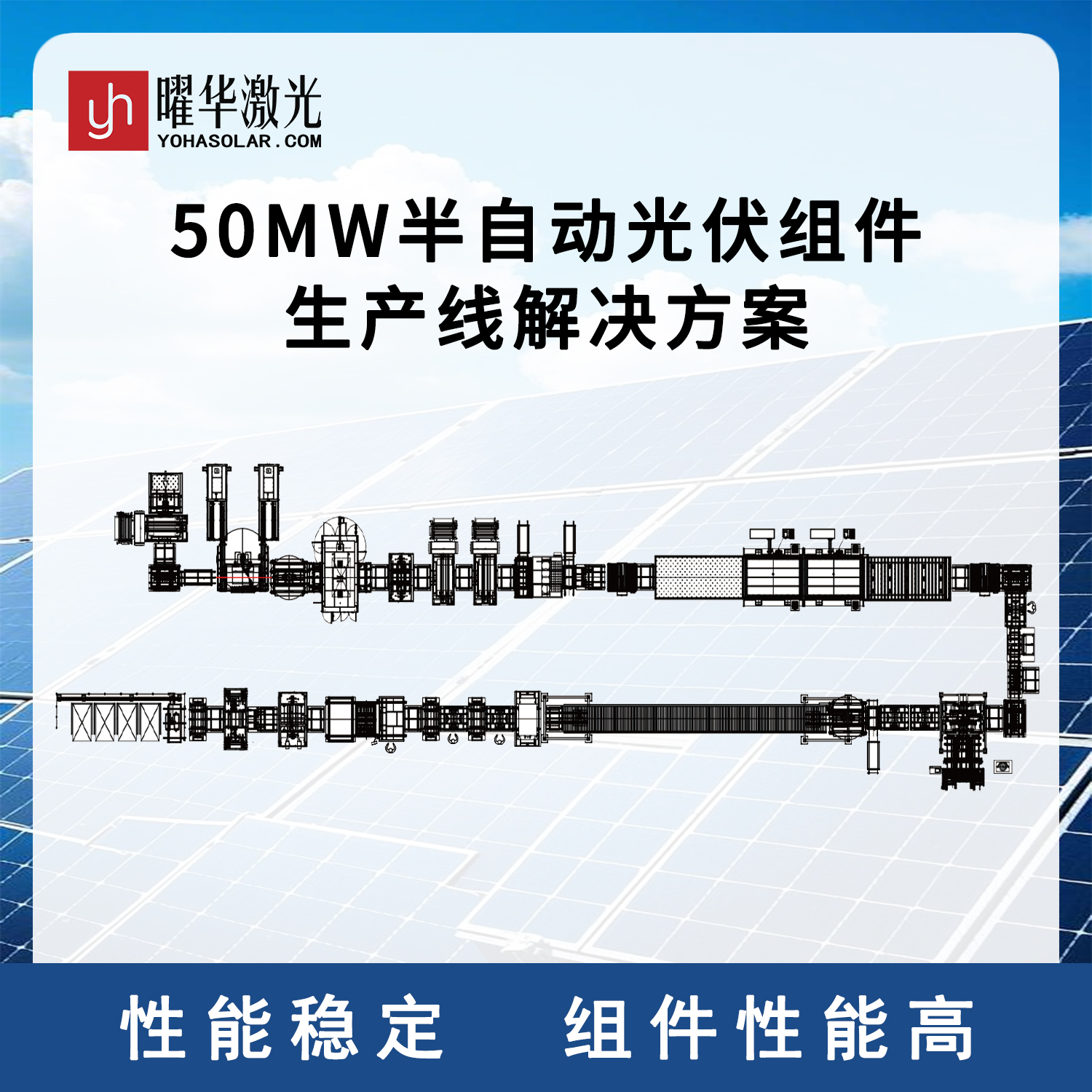
For photovoltaic manufacturers operating in the 5 to 100 MW spectrum, the transition from basic assembly to precision manufacturing is often defined not by the speed of the line, but by the accuracy of its critical stations. Semi-automatic lines, which blend manual labor with automated processes, are particularly sensitive to variations in material quality and operator skill. Therefore, the integration of high-precision metrology and process optimization equipment becomes the primary lever for reducing breakage rates and improving overall equipment effectiveness (OEE) in a mid-sized solar factory .
The production journey in an optimized semi-automatic line begins with stringent incoming quality control. Before cells ever reach the stringer, they must be classified to ensure consistent electrical performance. Utilizing a high-precision Cell Sorter, which operates with a light intensity of 1000W/m² and class A+ spectrum matching, ensures that only cells with matched current and voltage proceed down the line . This initial sorting is critical; mismatched cells in a 72-cell module can lead to significant power loss, a risk that mid-sized manufacturers cannot afford in a competitive market. Following sorting, the most mechanically demanding process is cell cutting, especially for half-cell or shingle designs which are standard in modern modules to reduce resistive losses.
To achieve the delicate balance between throughput and integrity, the cutting process demands advanced laser technology. This is where solutions like the Yoha Solar third-generation nondestructive laser scribing machine demonstrate their value. Utilizing a 1064nm fiber laser with a narrow beam width of just 45μm and a precision of ±0.1mm, this equipment performs a "cold cutting" process that minimizes the heat-affected zone . For a 50MW line processing thousands of cells daily, maintaining a breakage rate below 0.15% is essential for profitability. The machine’s ability to handle cells ranging from 156mm to 210mm at speeds up to 600mm/s ensures that the semi-automatic line remains flexible without sacrificing yield .#Solar Cell Cutting #Laser Scribing
After the cells are tabbed, stringed, and manually laid up, the semi-finished laminate enters a critical quality gate before the final lamination step. Inline Electroluminescence (EL) testing at this stage acts as a safety net, identifying micro-cracks or handling-induced defects that occurred during the manual layup process. Detecting these flaws before the irreversible lamination cycle prevents valuable materials from being turned into scrap. These EL testers, often integrated with AI-driven software, can automatically classify defects, ensuring that only visually and electrically sound strings proceed to the laminator. This proactive approach to quality control is a hallmark of a mature manufacturing operation, allowing for immediate corrective action if a particular work station is causing damage.#EL Testing #Quality Control
The final electrical verification is conducted using a Sun Simulator or IV Tester. To guarantee that the nameplate power is accurate and bankable, the tester must meet strict spectral requirements. Equipment such as the YHMT-AAA simulator provides spectral match and light stability within the A+ grade , ensuring compliance with international standards like IEC 60904-9 . For a 100MW line, this final step validates the energy yield promised to the end-user, securing the manufacturer’s reputation and enabling access to premium markets.#Solar Module Assembly
In conclusion, the competitiveness of a 5-100MW semi-automatic line hinges on strategic investments in precision metrology and process control. By integrating advanced sorting, cutting, and testing solutions, manufacturers can transform a flexible production environment into a reliable source of high-performance modules.
#Solar Testing# #IV Tester# #PV Manufacturing# #Solar Quality Control# #IV Testing# #Photovoltaic Manufacturing# #Solar Automation# #Renewable Tech# #Solar Panel Testing# #Clean Energy# #PV Innovation# #Solar Quality# #Renewable Tech# #PV Testing# #Solar Simulator# #Solar Cell Efficiency# #Photovoltaics# #Solar Module Testing# #Photovoltaic Quality# #Solar Panel Testing# #IV Curve Analysis# #Clean Energy Tech# #IV Tester# #Perovskite Tester# #IV Curve# #PV Efficiency# #Perovskite PV# #Solar Testing# #Solar Cell Inspection# #Auto Sorting Upgrade# #Sorting Tech Core# #PV Sorting Equipment# #Solar Cell Quality##Solar Cell QC##Cell Sorting Gear# #PV Inspection Tech# #Solar Cell Scribing Machine# #Solar Cell Scribing# #Solar Cell Tech# #Laser Scribing#
The production journey in an optimized semi-automatic line begins with stringent incoming quality control. Before cells ever reach the stringer, they must be classified to ensure consistent electrical performance. Utilizing a high-precision Cell Sorter, which operates with a light intensity of 1000W/m² and class A+ spectrum matching, ensures that only cells with matched current and voltage proceed down the line . This initial sorting is critical; mismatched cells in a 72-cell module can lead to significant power loss, a risk that mid-sized manufacturers cannot afford in a competitive market. Following sorting, the most mechanically demanding process is cell cutting, especially for half-cell or shingle designs which are standard in modern modules to reduce resistive losses.
To achieve the delicate balance between throughput and integrity, the cutting process demands advanced laser technology. This is where solutions like the Yoha Solar third-generation nondestructive laser scribing machine demonstrate their value. Utilizing a 1064nm fiber laser with a narrow beam width of just 45μm and a precision of ±0.1mm, this equipment performs a "cold cutting" process that minimizes the heat-affected zone . For a 50MW line processing thousands of cells daily, maintaining a breakage rate below 0.15% is essential for profitability. The machine’s ability to handle cells ranging from 156mm to 210mm at speeds up to 600mm/s ensures that the semi-automatic line remains flexible without sacrificing yield .#Solar Cell Cutting #Laser Scribing
After the cells are tabbed, stringed, and manually laid up, the semi-finished laminate enters a critical quality gate before the final lamination step. Inline Electroluminescence (EL) testing at this stage acts as a safety net, identifying micro-cracks or handling-induced defects that occurred during the manual layup process. Detecting these flaws before the irreversible lamination cycle prevents valuable materials from being turned into scrap. These EL testers, often integrated with AI-driven software, can automatically classify defects, ensuring that only visually and electrically sound strings proceed to the laminator. This proactive approach to quality control is a hallmark of a mature manufacturing operation, allowing for immediate corrective action if a particular work station is causing damage.#EL Testing #Quality Control
The final electrical verification is conducted using a Sun Simulator or IV Tester. To guarantee that the nameplate power is accurate and bankable, the tester must meet strict spectral requirements. Equipment such as the YHMT-AAA simulator provides spectral match and light stability within the A+ grade , ensuring compliance with international standards like IEC 60904-9 . For a 100MW line, this final step validates the energy yield promised to the end-user, securing the manufacturer’s reputation and enabling access to premium markets.#Solar Module Assembly
In conclusion, the competitiveness of a 5-100MW semi-automatic line hinges on strategic investments in precision metrology and process control. By integrating advanced sorting, cutting, and testing solutions, manufacturers can transform a flexible production environment into a reliable source of high-performance modules.
#Solar Testing# #IV Tester# #PV Manufacturing# #Solar Quality Control# #IV Testing# #Photovoltaic Manufacturing# #Solar Automation# #Renewable Tech# #Solar Panel Testing# #Clean Energy# #PV Innovation# #Solar Quality# #Renewable Tech# #PV Testing# #Solar Simulator# #Solar Cell Efficiency# #Photovoltaics# #Solar Module Testing# #Photovoltaic Quality# #Solar Panel Testing# #IV Curve Analysis# #Clean Energy Tech# #IV Tester# #Perovskite Tester# #IV Curve# #PV Efficiency# #Perovskite PV# #Solar Testing# #Solar Cell Inspection# #Auto Sorting Upgrade# #Sorting Tech Core# #PV Sorting Equipment# #Solar Cell Quality##Solar Cell QC##Cell Sorting Gear# #PV Inspection Tech# #Solar Cell Scribing Machine# #Solar Cell Scribing# #Solar Cell Tech# #Laser Scribing#
文章关键词: