Yoha Solar Drives Process Stability in 5-100MW Semi-Automatic Module Assembly
For photovoltaic manufacturers running 5-100MW semi-automatic lines, process stability is the cornerstone of profitability. Unlike fully automated gigafactories, these lines rely on human operators at various stages, making the precision of automated equipment critical to offset variability and maintain consistent output.
The journey begins with cell sorting and inspection. Implementing a high-accuracy Cell Sorter—such as those utilizing a class A+ solar simulator with 1000W/m² intensity—ensures that cells are binned by performance before assembly. This pre-sorting prevents efficiency mismatch, a common cause of hot spots in field-deployed modules. Here, Yoha Solar’s metrology solutions provide the repeatability needed to maintain uniform quality, even when operator shifts change. By catching underperforming cells early, manufacturers protect the nameplate power of every module leaving the line.
The most technically demanding step in a semi-automatic line is cell cutting for half-cell or shingle designs. Laser scribing must achieve a narrow kerf width and minimal heat-affected zone to preserve cell integrity. Equipment like the YHC-30F fiber laser scribing machine, with a cutting speed up to 600mm/s and scribing precision of ≤0.02mm, delivers the cold processing required for high-yield production. By integrating Yoha Solar’s laser systems, manufacturers can reduce breakage rates below 0.2%, directly improving material utilization—a critical factor when margins are tight in the 50MW scale. #Laser Scribing #Cell Cutting
Beyond cutting, laser marking systems play a vital role in traceability. In a semi-automatic environment where manual handling can introduce errors, permanently marking each module with a 2D barcode using a fiber laser marker (with marking speed up to 7000mm/s and depth control within 0.01-0.5mm) enables end-to-end quality tracking. This data integration supports continuous improvement and meets the traceability demands of international clients, ensuring that every panel can be traced back to its production batch. #Solar Traceability #Quality Control
Finally, the finished modules undergo rigorous performance validation using a Sun Simulator. A class A+ AAA-rated simulator, like the YHMT-AAA, guarantees that IV measurement is accurate under standard test conditions, with spectral match and light stability within A+ grade. This ensures that modules from a 100MW line deliver the promised power output, building trust with installers and EPCs who rely on consistent performance. #IV Testing
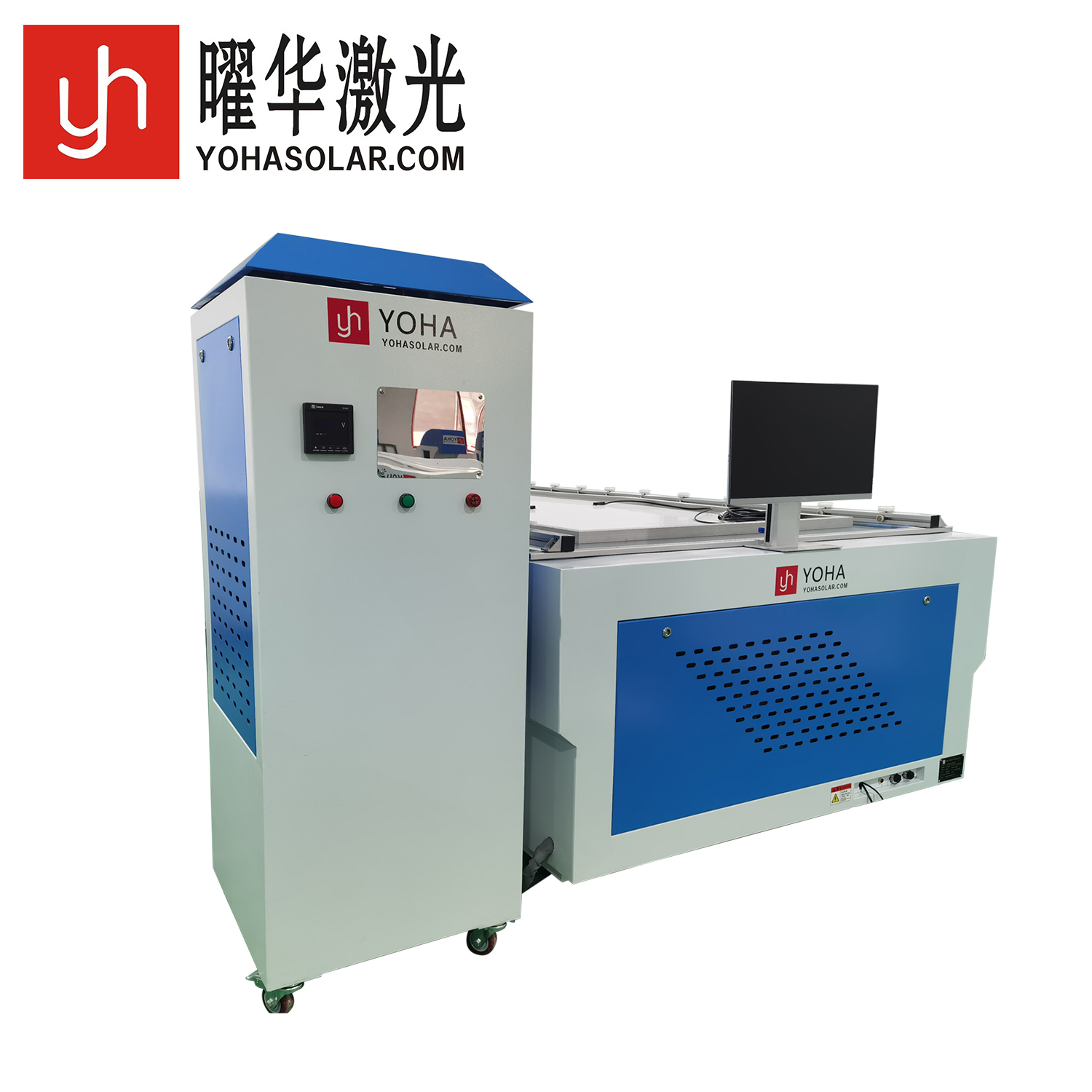
In summary, for 5-100MW semi-automatic lines, investing in precision equipment from partners like Yoha Solar transforms a flexible production setup into a reliable, high-quality manufacturing operation capable of competing in global markets. By stabilizing critical processes—from sorting to cutting and testing—manufacturers can maximize yield and minimize waste, securing their place in the evolving solar landscape.
#Solar Testing# #IV Tester# #PV Manufacturing# #Solar Quality Control# #IV Testing# #Photovoltaic Manufacturing# #Solar Automation# #Renewable Tech# #Solar Panel Testing# #Clean Energy# #PV Innovation# #Solar Quality# #Renewable Tech# #PV Testing# #Solar Simulator# #Solar Cell Efficiency# #Photovoltaics# #Solar Module Testing# #Photovoltaic Quality# #Solar Panel Testing# #IV Curve Analysis# #Clean Energy Tech# #IV Tester# #Perovskite Tester# #IV Curve# #PV Efficiency# #Perovskite PV# #Solar Testing# #Solar Cell Inspection# #Auto Sorting Upgrade# #Sorting Tech Core# #PV Sorting Equipment# #Solar Cell Quality##Solar Cell QC##Cell Sorting Gear# #PV Inspection Tech# #Solar Cell Scribing Machine# #Solar Cell Scribing# #Solar Cell Tech# #Laser Scribing#
The journey begins with cell sorting and inspection. Implementing a high-accuracy Cell Sorter—such as those utilizing a class A+ solar simulator with 1000W/m² intensity—ensures that cells are binned by performance before assembly. This pre-sorting prevents efficiency mismatch, a common cause of hot spots in field-deployed modules. Here, Yoha Solar’s metrology solutions provide the repeatability needed to maintain uniform quality, even when operator shifts change. By catching underperforming cells early, manufacturers protect the nameplate power of every module leaving the line.
The most technically demanding step in a semi-automatic line is cell cutting for half-cell or shingle designs. Laser scribing must achieve a narrow kerf width and minimal heat-affected zone to preserve cell integrity. Equipment like the YHC-30F fiber laser scribing machine, with a cutting speed up to 600mm/s and scribing precision of ≤0.02mm, delivers the cold processing required for high-yield production. By integrating Yoha Solar’s laser systems, manufacturers can reduce breakage rates below 0.2%, directly improving material utilization—a critical factor when margins are tight in the 50MW scale. #Laser Scribing #Cell Cutting
Beyond cutting, laser marking systems play a vital role in traceability. In a semi-automatic environment where manual handling can introduce errors, permanently marking each module with a 2D barcode using a fiber laser marker (with marking speed up to 7000mm/s and depth control within 0.01-0.5mm) enables end-to-end quality tracking. This data integration supports continuous improvement and meets the traceability demands of international clients, ensuring that every panel can be traced back to its production batch. #Solar Traceability #Quality Control
Finally, the finished modules undergo rigorous performance validation using a Sun Simulator. A class A+ AAA-rated simulator, like the YHMT-AAA, guarantees that IV measurement is accurate under standard test conditions, with spectral match and light stability within A+ grade. This ensures that modules from a 100MW line deliver the promised power output, building trust with installers and EPCs who rely on consistent performance. #IV Testing
In summary, for 5-100MW semi-automatic lines, investing in precision equipment from partners like Yoha Solar transforms a flexible production setup into a reliable, high-quality manufacturing operation capable of competing in global markets. By stabilizing critical processes—from sorting to cutting and testing—manufacturers can maximize yield and minimize waste, securing their place in the evolving solar landscape.
#Solar Testing# #IV Tester# #PV Manufacturing# #Solar Quality Control# #IV Testing# #Photovoltaic Manufacturing# #Solar Automation# #Renewable Tech# #Solar Panel Testing# #Clean Energy# #PV Innovation# #Solar Quality# #Renewable Tech# #PV Testing# #Solar Simulator# #Solar Cell Efficiency# #Photovoltaics# #Solar Module Testing# #Photovoltaic Quality# #Solar Panel Testing# #IV Curve Analysis# #Clean Energy Tech# #IV Tester# #Perovskite Tester# #IV Curve# #PV Efficiency# #Perovskite PV# #Solar Testing# #Solar Cell Inspection# #Auto Sorting Upgrade# #Sorting Tech Core# #PV Sorting Equipment# #Solar Cell Quality##Solar Cell QC##Cell Sorting Gear# #PV Inspection Tech# #Solar Cell Scribing Machine# #Solar Cell Scribing# #Solar Cell Tech# #Laser Scribing#
文章关键词: